Death Valley day trip planning starts with one simple idea: expect extremes. Located in Death Valley National Park, this is one of the hottest places on Earth, with summer temperatures often crossing 49°C. Sounds harsh, but that’s part of the appeal.
The landscape keeps shifting. You’ll see vast salt flats at Badwater Basin, rolling sand dunes, rugged badlands, and narrow canyons, all within a single drive. It almost feels unreal, like the scenery can’t make up its mind.
This trip suits road trippers, photographers, and anyone drawn to raw, untamed places. It’s not exactly comfortable, and that’s the point. If you’re curious about nature at its most extreme, this quick journey leaves a lasting impression.
Death Valley At A Glance: Quick Facts You’ll Actually Use
Before you start picturing endless dunes and blazing heat, let’s ground things a bit. A few quick facts can make your trip planning smoother and, honestly, save you from rookie mistakes.
Death Valley isn’t just hot, it’s extreme in every sense, so knowing what to expect matters more than you’d think.
Here’s a compact snapshot to keep handy:
| Factor | Details |
| Location | Death Valley National Park, California |
| Best Time To Visit | October to April |
| Summer Temperature | Can exceed 50°C |
| Winter Temperature | Typically 15–25°C |
| Entrance Fee (2025–2026) | Per vehicle, valid for 7 days |
| Ideal Duration | 1 to 2 days |
| Closest Airport | Las Vegas or Los Angeles |
You might glance at “50°C” and think, okay, it’s hot. But it’s not just hot, it’s the kind of heat that drains you fast. That’s why most travelers stick to cooler months.
Where Is Death Valley National Park, And How Far Is It?
Planning a trip to Death Valley sounds simple until you check the map. It looks close to everything, yet somehow feels far from everywhere. Let me explain.
Where Is Death Valley Located?
Death Valley National Park lies in eastern California, right along the California and Nevada border. Most of it sits in California, but a small portion spills into Nevada.
It’s tucked inside the Mojave Desert, surrounded by mountains that trap intense heat. That’s why temperatures here push limits most places never reach.
Quick context helps:
- About 2 hours from Las Vegas
- Around 4.5 to 5 hours from Los Angeles
Remote, yes. But still reachable by road without much hassle.
How Far Is Death Valley From Palm Springs?
From Palm Springs, Death Valley is roughly 300 miles away. Driving time usually falls between 5.5 to 6.5 hours.
The route often goes via CA 62 or I-15 through Baker. Roads are open and scenic, but services are limited, so fuel planning matters.
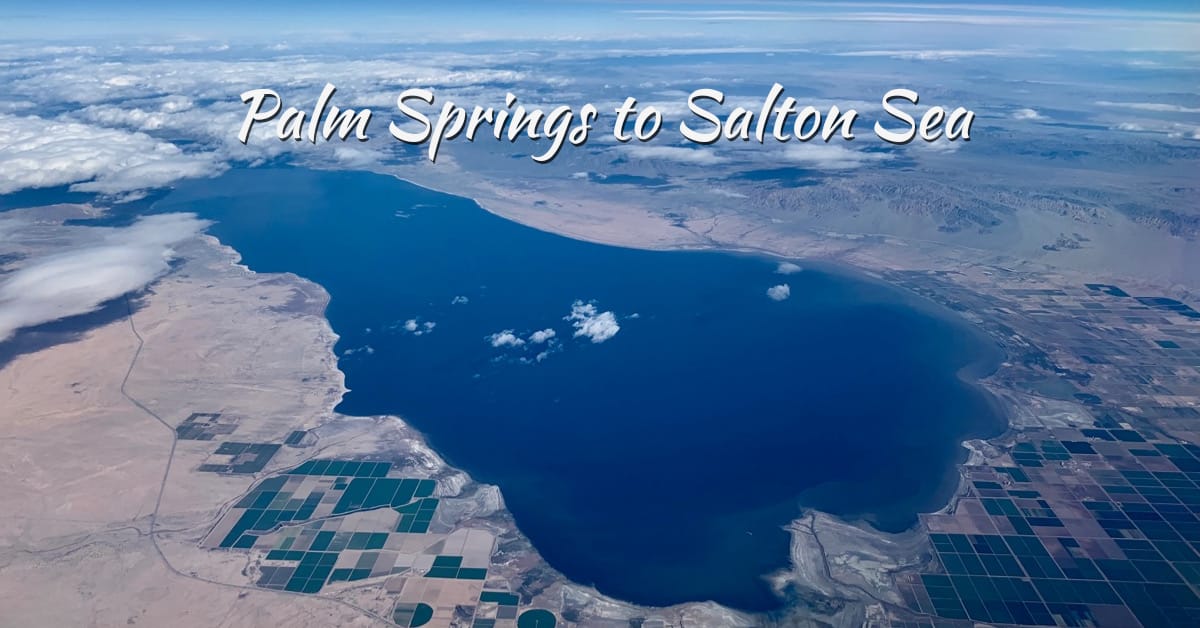
Want another scenic drive? Explore Palm Springs to Salton Sea: Stunning 2026 Road Trip Guide for a unique, offbeat desert experience.
How To Reach Death Valley National Park
Getting to Death Valley is part of the adventure. There’s no single “easy” way, but that’s kind of the charm.
Wide roads, empty stretches, and that slow shift from city to raw desert. You feel it.
By Car: The Best Option For A Death Valley Day Trip
Driving is hands down the most practical way to reach Death Valley National Park. Public transport barely touches this region, so having your own car gives you full control.
From Palm Springs, the drive is about 5.5 to 6.5 hours. Common routes include:
- CA 62 to CA 127 through desert landscapes
- I-15 North via Baker, then connecting roads into the park
From Los Angeles:
- Around 4.5 to 5 hours via I 15 North
From Las Vegas:
- Just 2 to 2.5 hours via NV 160 and CA 190
Here’s the thing. Roads are well-maintained, but services are limited. Gas stations can be far apart, so never push your luck on fuel.
By Flight: Best Airport For Death Valley National Park
There’s no commercial airport inside Death Valley, so you’ll need to fly into nearby cities.
Best options:
Las Vegas is the closest and most convenient, especially for short trips. It cuts down driving time and makes planning simpler.
Getting Around Death Valley National Park
Once inside the park, a car isn’t just helpful, it’s essential.
Distances between attractions are large. You might drive 30 to 60 minutes between stops.
Keep in mind:
- Fuel is available inside the park, but it’s expensive
- Fill up before entering whenever possible
- Carry water, snacks, and a basic emergency kit
Honestly, this isn’t a place for spontaneous travel. A little planning goes a long way.
Is Death Valley Worth Visiting For A Day Trip?
Short answer? Yes. But it depends on what you expect.
Death Valley is one of those rare places where a single day still feels complete. You can hit iconic spots like Badwater Basin, Zabriskie Point, and Dante’s View in just a few hours.
https://www.youtube.com/watch?v=4mQLFzw4KtgThe landscapes shift fast. Salt flats, golden hills, rugged mountains. It almost feels like traveling across different planets in one day.
Here’s why it works:
- Major attractions are connected by scenic roads
- Sunrise and sunset views are incredibly rewarding
- You don’t need long hikes to experience the highlights
Compared to other national parks near cities, Death Valley is less about dense forests or waterfalls and more about raw, open space. Think of it as the opposite of Yosemite or Zion.
Death Valley Day Trip Map And Route Planning
Planning a Death Valley day trip can feel a bit like plotting a desert heist. Distances stretch out, fuel stops are scarce, and the heat does not forgive poor timing.
So yes, having a clear route matters more than you might expect.
Most travelers start from Furnace Creek, and honestly, that is your best anchor point. It sits near the center of the park, which helps keep driving time under control.
Death Valley Loop Drive Overview
The popular Death Valley loop drive forms a loose circle that begins and ends at Furnace Creek. It connects the park’s major highlights in a way that feels smooth, not rushed.
Here’s the typical loop route:
- Furnace Creek to Zabriskie Point
- Zabriskie Point to Dante’s View
- Return toward Badwater Basin
- Continue to Artist’s Drive
- Loop back via Golden Canyon
It almost feels like stitching together different planets in one day. Dry salt flats, golden badlands, and colorful rock formations all show up in a single drive.
One Day Itinerary Death Valley Route Map
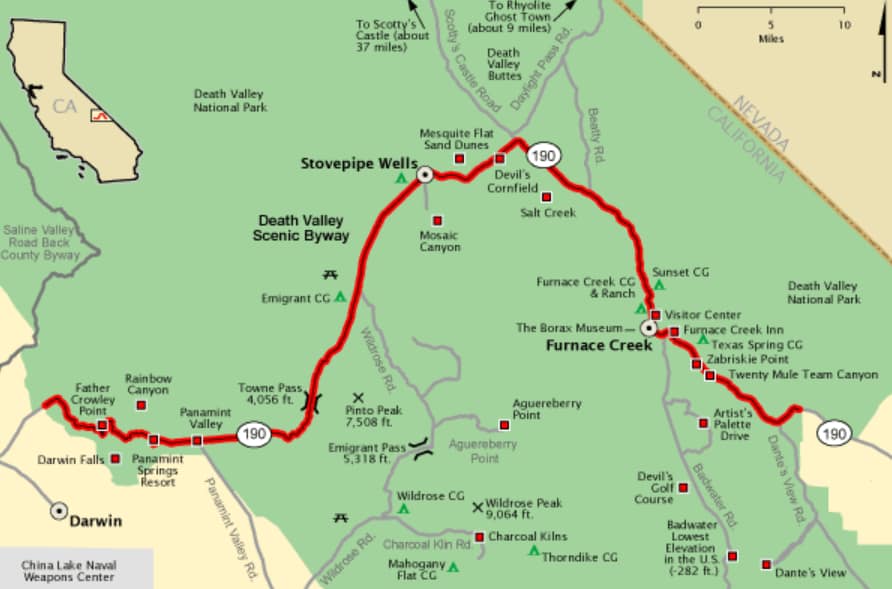
Here’s the thing. The order of stops is not random. It follows light, elevation, and temperature patterns. Start early, move gradually, and you will feel the difference.
| Stop | Distance From Previous | Drive Time |
| Furnace Creek to Zabriskie Point | 5 miles | 10 mins |
| Zabriskie Point to Dante’s View | 13 miles | 25 mins |
| Dante’s View to Badwater Basin | 30 miles | 45 mins |
| Badwater Basin to Artist’s Drive | 5 miles | 10 mins |
Morning light makes Zabriskie glow softly. By midday, Badwater Basin becomes stark and surreal. Later in the day, Artist’s Drive starts to show its colors more vividly.
Perfect One Day In Death Valley – Detailed Itinerary
Spending one day in Death Valley sounds ambitious, maybe even a bit unrealistic. But here’s the thing. With the right timing and a steady pace, it works beautifully. You just have to move with the sun, not against it.
Start early. Like really early. The desert rewards those who wake up before it does.
Sunrise At Zabriskie Point
Zabriskie Point is where your day begins, no debate. Arrive before sunrise, and watch the golden badlands slowly light up.
The ridges glow in soft orange tones, almost like melted caramel. It is quiet too. Just wind, maybe a camera shutter or two.
- Best time: 30 minutes before sunrise
- Parking: Easy access, short walk
- Tip: Bring a light jacket, mornings can surprise you
Golden Canyon To Red Cathedral
After sunrise, head toward Golden Canyon. This short hike feels like walking into a painting.
The trail is about 3 miles round trip if you go all the way to Red Cathedral. But you can turn back anytime.
- Trail type: Out and back
- Duration: 1.5 to 2 hours
- Difficulty: Easy to moderate
Honestly, if you are short on time, even a 30 minute walk here is worth it.
Artist’s Drive And Artist’s Palette
By mid-morning, take the scenic Artist’s Drive. It is a one-way road that twists through hills splashed with pink, green, and purple tones.
Artist’s Palette is the main stop, and yes, the colors are real.
- Drive length: 9 miles loop
- Best light: Late morning to afternoon
- Road note: No RVs or long vehicles
It feels almost unreal, like someone painted the hills on purpose.
Devil’s Golf Course
Next, make a quick stop at Devil’s Golf Course. The name sounds dramatic, and the terrain lives up to it.
Sharp salt formations stretch in every direction. Walking here is tricky, so watch your step.
- Stop time: 15 to 20 minutes
- Surface: Jagged and uneven
- Tip: Good shoes help
Badwater Basin Salt Flats
Now you reach Badwater Basin, sitting at 282 feet below sea level. It is the lowest point in North America, and it feels vast.
The salt flats form endless white patterns. Step out, walk a little, and just take it in.
- Walk distance: Flexible
- Midday visit: Hot but striking
- Photo tip: Look for geometric salt shapes
Strange place, honestly. Quiet, bright, and almost blinding.
Natural Bridge Trail
In the afternoon, head to Natural Bridge Trail. It is short, simple, and a nice break from long drives.
The trail leads to a rock arch tucked inside a canyon.
- Distance: 1 mile round trip
- Time: 45 minutes
- Shade: Limited, go prepared
A small detour, but it adds a different texture to your day.
Mesquite Flat Sand Dunes
Late afternoon is perfect for Mesquite Flat Sand Dunes. The light softens, and the sand starts to glow.
You can wander freely here. No fixed trail, just dunes rolling into the distance.
- Best time: Before sunset
- Walking: Easy but tiring on sand
- Tip: Stay for changing light
It feels like the desert you imagine in movies.
Sunset At Dante’s View
End your day at Dante’s View. The road climbs high above the valley, and suddenly everything opens up.
You can see Badwater Basin far below, tiny and distant.
- Elevation: Over 5,000 feet
- Sunset view: Wide and dramatic
- Tip: Bring layers, it gets windy
Craving more rugged landscapes? Check out Palm Springs to Eastern Desert Day Trip: 10 Amazing Stops (2026 Guide) for breathtaking views and lesser-known stops.
Must-Visit Spots On Your Death Valley Day Trip
Death Valley is not the kind of place where you just “see a few sights.” It pulls you in, stop by stop, each one feeling completely different from the last.
Some places are quick pauses, others make you linger longer than planned. Either way, these are the spots you should not skip.
Furnace Creek Visitor Center
Furnace Creek Visitor Center is your starting point, and honestly, it sets the tone for the whole day. Before heading deeper into the park, stop here to get your bearings.
Zabriskie Point
Zabriskie Point delivers one of the most iconic views in Death Valley. The golden badlands stretch out in soft, rolling textures that almost look unreal.
Mesquite Flat Sand Dunes
If you picture a desert in your mind, chances are it looks like Mesquite Flat Sand Dunes. Wide, sweeping dunes with rippled sand that shifts with the wind.
Eureka Dunes
Eureka Dunes sit far from the main tourist loop, and that distance keeps crowds away. Getting here takes effort, but that is part of the appeal.
Artist’s Palette Drive
Artist’s Palette Drive is where the desert shows off a bit. The hills are streaked with colors like green, pink, purple, and yellow, caused by mineral deposits.
Badwater Basin Salt Flats
Badwater Basin is the lowest point in North America at 282 feet below sea level. And yes, it feels as extreme as it sounds.
Devil’s Golf Course
Devil’s Golf Course looks harsh, and it is. The ground is covered in jagged salt formations that crunch underfoot.
Father Crowley Overlook (Rainbow Canyon)
Father Crowley Overlook offers a different kind of view. Instead of salt or sand, you get a deep canyon carved into the desert landscape.
Best Hikes And Trails In Death Valley National Park
Hiking in Death Valley is not just about distance; it is about contrast. One trail feels like a dry riverbed, another leads to a hidden waterfall. Strange mix, right? That is exactly what makes it memorable.
Here are a few trails worth your time, even on a tight day trip.
| Trail Name | Distance | Difficulty | Key Highlights / Tips |
| Golden Canyon Trail | 2–3 miles | Easy to Moderate | Famous for golden rock walls; don’t miss Red Cathedral viewpoint |
| Mosaic Canyon | 2 miles (round trip) | Easy to Moderate | Smooth, polished canyon walls; best visited early for shade |
| Darwin Falls | 2 miles (round trip) | Easy | Hidden desert waterfall with lush greenery; best in the morning |
| Ubehebe Crater Trail | 1.5 miles (loop) | Moderate | Massive volcanic crater views; expect strong winds |
| Telescope Peak Trail | 14 miles (round trip) | Hard | Highest point in Death Valley; stunning views, snow possible in winter |
Honestly, you do not need to hike them all. Just pick one or two, and let the desert do the rest.
Death Valley’s Best Stargazing Spots
Death Valley is a certified International Dark Sky Park, which basically means one thing. The night sky here is as clear as it gets. No city lights, no haze, just a sky full of stars that actually feels alive.
On moonless nights, you can spot the Milky Way stretching across the horizon. It is quiet, almost too quiet, and that stillness makes the stars stand out even more.
Top stargazing locations include:
- Mesquite Flat Sand Dunes: Open space, minimal obstruction, great for wide sky views
- Harmony Borax Works: Easy access and close to Furnace Creek
- Badwater Basin: Flat, reflective salt surfaces add a surreal touch
Honestly, once the stars come out, you will not rush back.
Things To Do In Death Valley Beyond Sightseeing
Death Valley is not just about viewpoints and quick stops. Stay a little longer, and you start noticing the quieter, more surprising side of the desert.
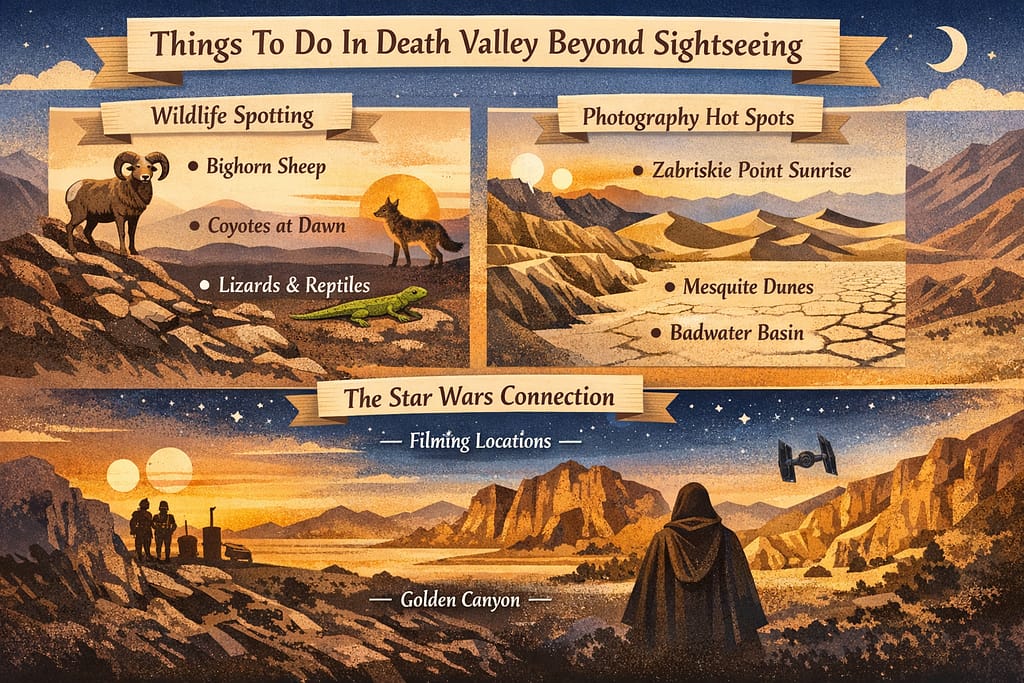
You know what? It adds a bit of cinematic magic to an already surreal place.
Visiting national parks next? Read Palm Springs to Joshua Tree: 1 Epic Day Trip Guide 2026 for the perfect mix of nature, hikes, and iconic desert scenery.
Where To Eat In Death Valley
Food options in Death Valley are limited, but the few places available are reliable and well-placed along your route.
You will not find luxury dining here, but you will find hearty meals that hit the spot after a long day.
- Stovepipe Wells Village: It is casual dining with burgers, sandwiches, and quick bites. Good stop near the sand dunes
- Furnace Creek Ranch: It is a main food hub in the park. Offers a wider menu, including breakfast, lunch, and dinner options
- Panamint Springs Resort: It is a bit remote, but known for its relaxed vibe and surprisingly good meals
Honestly, in a place this extreme, even a simple meal feels rewarding.
Road Trip: Palm Springs To Death Valley
Driving from Palm Springs to Death Valley feels like a transition between worlds. You leave behind palm-lined streets and slowly enter a stark, open desert that stretches endlessly.
It is not just a drive; it is part of the experience.
Palm Springs To Death Valley National Park Drive
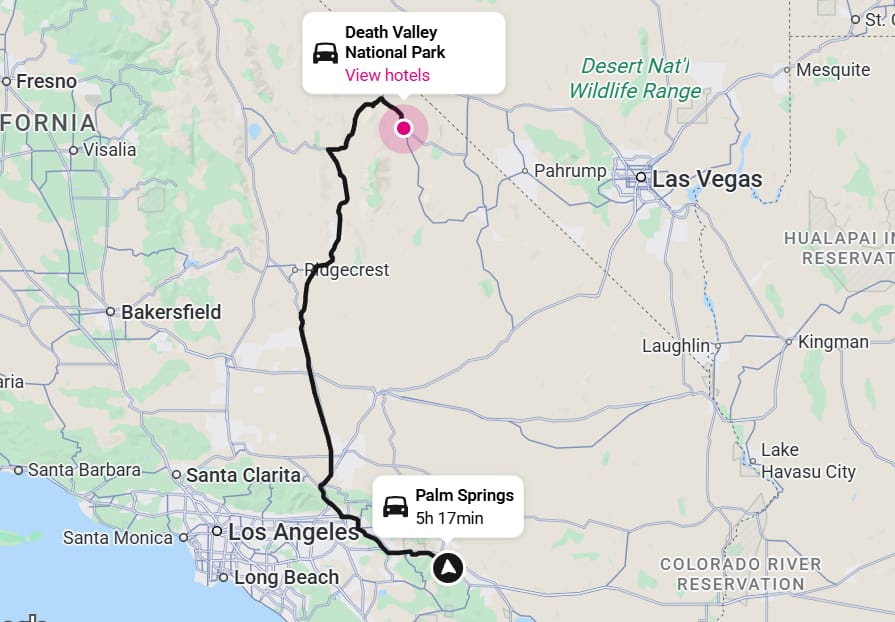
The most common route runs via CA-62 and I-15, connecting through Barstow before heading into the park.
- Route: Palm Springs → CA-62 → I-15 → CA-127 → Death Valley
- Driving time: Around 4.5 to 5 hours to Furnace Creek
- Road condition: Fully paved and suitable for all vehicles
It may look long on the map, but the changing landscape keeps it interesting.
Palm Desert To Death Valley
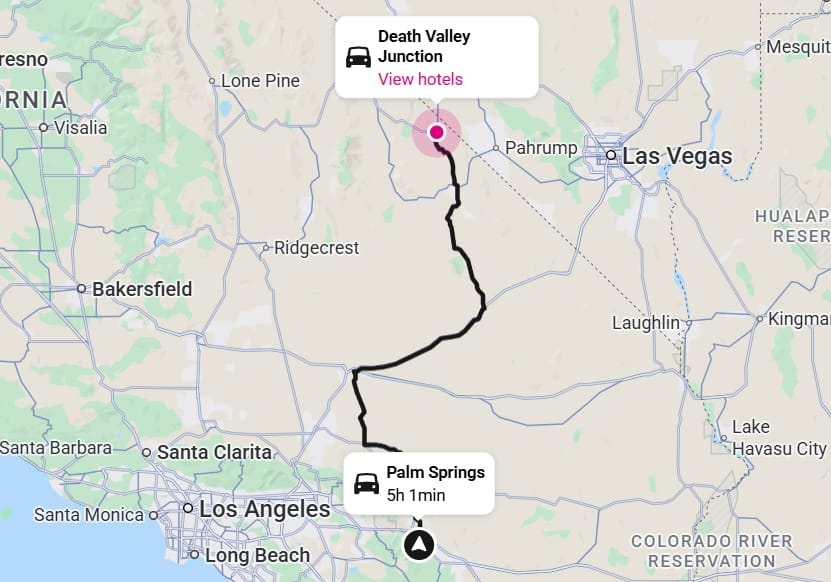
If you are starting from Palm Desert, the route is similar but slightly shorter, depending on your exact location.
- Option 1: Join CA-62 and follow the main route
- Option 2: Take I-10 west briefly, then connect to I-15 north
- Time difference: Usually 15 to 25 minutes shorter than Palm Springs
Honestly, both routes feel quite similar once you are out in the open desert.
Where To Stay Near Death Valley
Choosing where to stay near Death Valley can shape your entire trip. Stay inside the park, and you save time.
Stay outside, and you gain comfort or better prices. It really depends on your travel style and how much driving you are okay with.
Spirit Of Sofia – Boutique Stay Near Your Route

If you are combining Palm Springs and Death Valley, Spirit of Sofia offers a more refined stop along the way. It is not inside the park, but that is kind of the point.
- Ideal base before or after your Death Valley drive
- Location works well for Palm Springs to Death Valley road trips
- Designed with a calm, minimalist aesthetic that feels intentional
The property leans into quiet luxury. Clean lines, soft tones, and a peaceful setting that helps you slow down after long desert drives.
Honestly, after a full day in harsh desert conditions, coming back to a place like this feels almost necessary.
Other Accommodation Options Near Death Valley
If you prefer staying closer to the park, these options are more practical.
- Furnace Creek Ranch: It is a main lodging hub inside the park with the most amenities, including dining and fuel
- Stovepipe Wells Village: It is a simpler, more budget-friendly option located near Mesquite Flat Sand Dunes
- Panamint Springs Resort: It is remote and quieter, ideal if you want fewer crowds and wide open views
Each option has its own vibe. Some are convenient, some are peaceful. You just have to decide what matters more at the end of your day.
What To Pack For One Day In Death Valley
Packing for Death Valley is less about comfort and more about staying prepared. The desert can be unpredictable, and honestly, a few smart items can make or break your day.
- Water and electrolytes: Carry at least 4 to 5 liters per person, plus electrolyte packets to avoid dehydration
- Sunscreen, hat, sunglasses: The sun is intense, even in cooler months. Protect your skin and eyes
- Snacks and meals: Food options are limited, so pack easy, non-perishable snacks and a light meal
- Power bank and offline GPS: Keep your phone charged and download maps in advance, since signal drops often
- Emergency kit: Include a flashlight, basic first aid, and a spare tire kit
It may seem like a lot, but out here, being prepared feels surprisingly comforting.
Best Time To Visit Death Valley
Timing your visit to Death Valley isn’t just helpful, it’s essential. Come at the wrong time, and the heat can feel overwhelming.
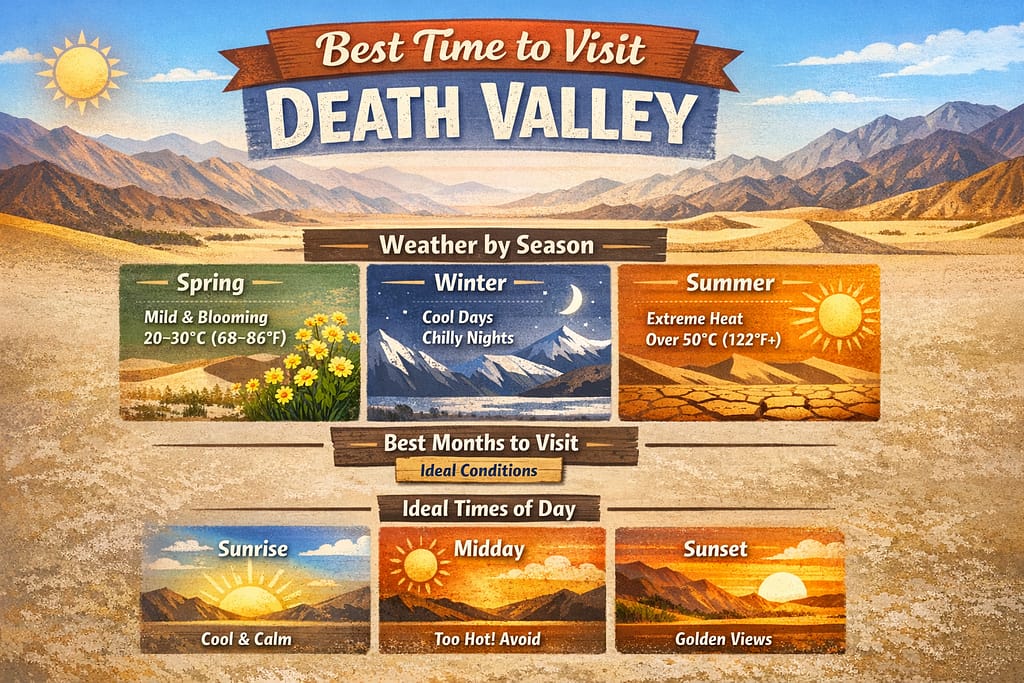
Honestly, in Death Valley, timing isn’t just about comfort. It shapes the entire experience.
Planning more desert adventures? Don’t miss Must-Visit Palm Springs Attractions You Can’t Miss in 2026! for iconic spots and hidden gems nearby.
Plan Your Ultimate Death Valley Day Trip
A Death Valley day trip packs in more than you expect. Sunrise at Zabriskie Point, the vast salt flats of Badwater Basin, and sunset from Dante’s View all come together in one unforgettable loop.
The best time to visit is between October and April, when temperatures are manageable and exploring feels enjoyable, not exhausting. Start early, plan your route well, and carry enough water.
It may seem like a quick trip, but it stays with you. Plan smart, stay safe, and let the desert surprise you in its own quiet way.
FAQs | Death Valley Day Trip
1. Can you visit Death Valley in one day?
Yes, a day trip is possible if you start early and plan your stops wisely. Focus on key highlights like Badwater Basin, Zabriskie Point, and Artist’s Palette.
2. How much time is needed to visit Death Valley?
Ideally, 1–2 days are enough to explore major attractions at a relaxed pace. A single day works for a quick highlights tour.
3. Is Death Valley or Joshua Tree better?
Death Valley offers dramatic desert landscapes and extreme terrain, while Joshua Tree is known for its unique rock formations and trees. The choice depends on whether you prefer vast scenery or hiking and climbing.
4. When was the last super bloom in Death Valley?
The last major super bloom occurred in 2016, with smaller blooms appearing after rare rainfall years. These events depend heavily on weather conditions.
5. When to avoid Death Valley?
Avoid visiting in peak summer (June to September) due to extreme heat exceeding 45°C (113°F). It can be dangerous for outdoor activities.
6. Can I sleep in Death Valley?
Yes, you can stay at campgrounds, lodges, or nearby hotels within the park. Advance booking is recommended during peak seasons.
7. Which month is best to visit Death Valley?
The best time is from November to March when temperatures are cooler and more comfortable. Spring (March–April) is great for wildflowers.
8. What is the entrance fee for Death Valley?
The entrance fee is typically around $30 per vehicle, valid for 7 days. Prices may vary slightly, so check official updates before visiting.
9. How many people have died in Death Valley?
Over the years, several fatalities have occurred, mostly due to heat-related conditions. Proper preparation and hydration significantly reduce risks.
10. Is it free to enter Death Valley?
No, entry is not free for most visitors, but certain fee-free days are offered by the National Park Service each year.